Why Do Some Crusher Liners Last 3 Months While Others Last a Year? The Hidden Manufacturing Secrets
If you run a quarry or a mining plant, you’ve likely faced this frustrating dilemma: You buy two sets of crusher liners (cone or jaw) that look identical on the outside and claim to use the exact same material (Mn18Cr2, for instance). Yet, one set gets completely worn out or cracks in three months, while the other smoothly operates for nearly a year.
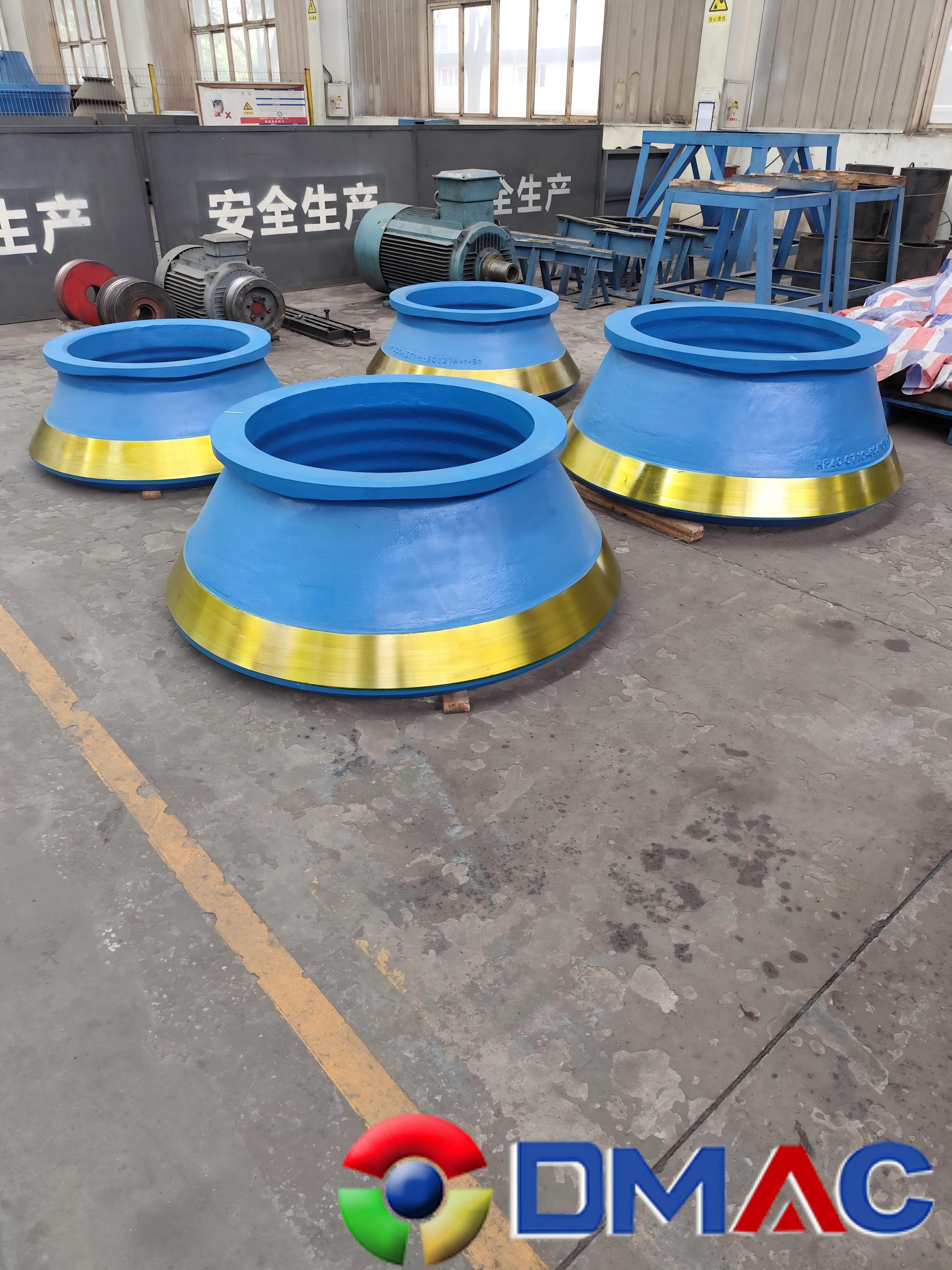
Why such a massive gap?
Most buyers immediately assume it’s a material issue. While metallurgy is the foundation, it is only 20% of the story. The real differentiator lies in the 80% unseen work—the complete manufacturing process.
Let’s take a walk through a world-class foundry floor to see how a premium, high-performance crusher liner is actually born, and why cutting corners on the manufacturing process always ends up costing you more in downtime.
01. Pattern Making: Accuracy Starts at Step One
Every premium casting begins with a high-quality mold (pattern). The pattern isn't just a basic shape; it determines the outer dimensions, shrinkage compensation, and surface finish of the final liner.
For heavy-duty mining machinery, a deviation of just "a few millimeters" can cause a nightmare during installation. Leading manufacturers utilize high-precision wood, metal, or lost-foam patterns. Mature foundries run strict dimensional and shrinkage checks right at this stage because quality isn't added at the end—it’s built into the very first step.
02. Molding & Core Making: Building a Precise "Home" for Liquid Steel
Once the pattern is ready, engineers must create a precise cavity to hold the molten steel. Depending on the liner structure, advanced techniques like resin sand molding or lost-foam casting are deployed.
For complex cone liners that feature intricate lock holes, reinforcement ribs, or specific internal chambers, specialized sand cores must be designed. These steps are completely hidden from the end-user, but this "invisible" precision ensures the final product perfectly matches your crusher's original specifications.
03. Alloy Melting: The Secret to Consistency
Next comes the heart of the foundry: alloy melting. Scraps, pig iron, and specific ferroalloys are charged into medium-frequency induction furnaces.
In premium manufacturing, melting isn't just about liquefying metal; it’s about "chemical consistency". Micro-adjustments in elements like Carbon (C), Manganese (Mn), Chrome (Cr), and Molybdenum (Mo) completely shift the liner's destiny.
- Why do some liners crack prematurely?
- Why do some wear out unevenly when crushing hard rocks like granite or basalt?
The culprit is almost always unstable chemical composition during melting. Top-tier foundries utilize real-time **spectrometric analysis** right at the furnace side to lock in the exact elemental ratios before a single drop is poured.
04. Pouring & Controlled Cooling: Eliminating Internal Flaws
The pouring process takes only a few minutes, but it dictates the internal integrity of the liner. Pouring temperature, speed, steel purity, and riser design must all work in perfect harmony to prevent internal shrinkage, gas holes, or slag inclusions.
After pouring, "slow and controlled cooling" is paramount. For massive, thick-walled cone crusher liners, uneven cooling speeds create massive internal residual stresses. Skip or rush this cooling phase, and the liner is highly susceptible to micro-cracks during heat treatment or heavy-field operations.
05. Shakeout & Cleaning: Revealing the Rough Diamond
Once thoroughly cooled, the casting is removed from the sand mold. Workers shake out the sand, cut off the pouring gates and risers, and grind away any flash or burrs.
This is more than just a cleanup job; it acts as a critical visual inspection gateway. Any surface cracks, casting defects, or abnormal deformations can be caught and flagged right here.
06. Heat Treatment: Unlocking the True Wear Resistance
If the raw alloy represents the "potential" of a liner, heat treatment is what "wakes that potential up".
Different materials require completely different heat treatment curves:
- High Manganese Steel (Mn13, Mn18, Mn22): Requires water-quenching (solution treatment) to transform the microstructure into pure austenite, which is essential for impact work-hardening.
- High Chromium Cast Iron: Requires precise air or oil quenching followed by tempering to maximize rock-crushing hardness without becoming brittle.
07. Machining: Ensuring a Perfect Fit
After heat treatment, the liner goes to the heavy machining workshop. The installation seats, mating surfaces, and bolt holes must be machined precisely to the blueprint.
In mining operations, dimensional accuracy directly impacts your machine's health. If a liner doesn't fit perfectly, it creates uneven stress distribution. This leads to loose liners, structural damage to the crusher’s mainframe, and ultimately, catastrophic breakdown. A premium liner must fit like a glove, every single time.
08. Quality Control: The Final Gateway
Before any liner is packed into a shipping container, it must pass a rigorous QA gauntlet:
- Chemical Composition Verification (via Spectrometer)
- Hardness Testing (HB/HRC)
- Ultrasonic or Magnetic Particle Testing(NDT for subsurface cracks)
- Full Dimensional Measurement
However, world-class manufacturers don't rely on the final inspection to "find" problems—they rely on process control so that the final inspection is merely a formality.
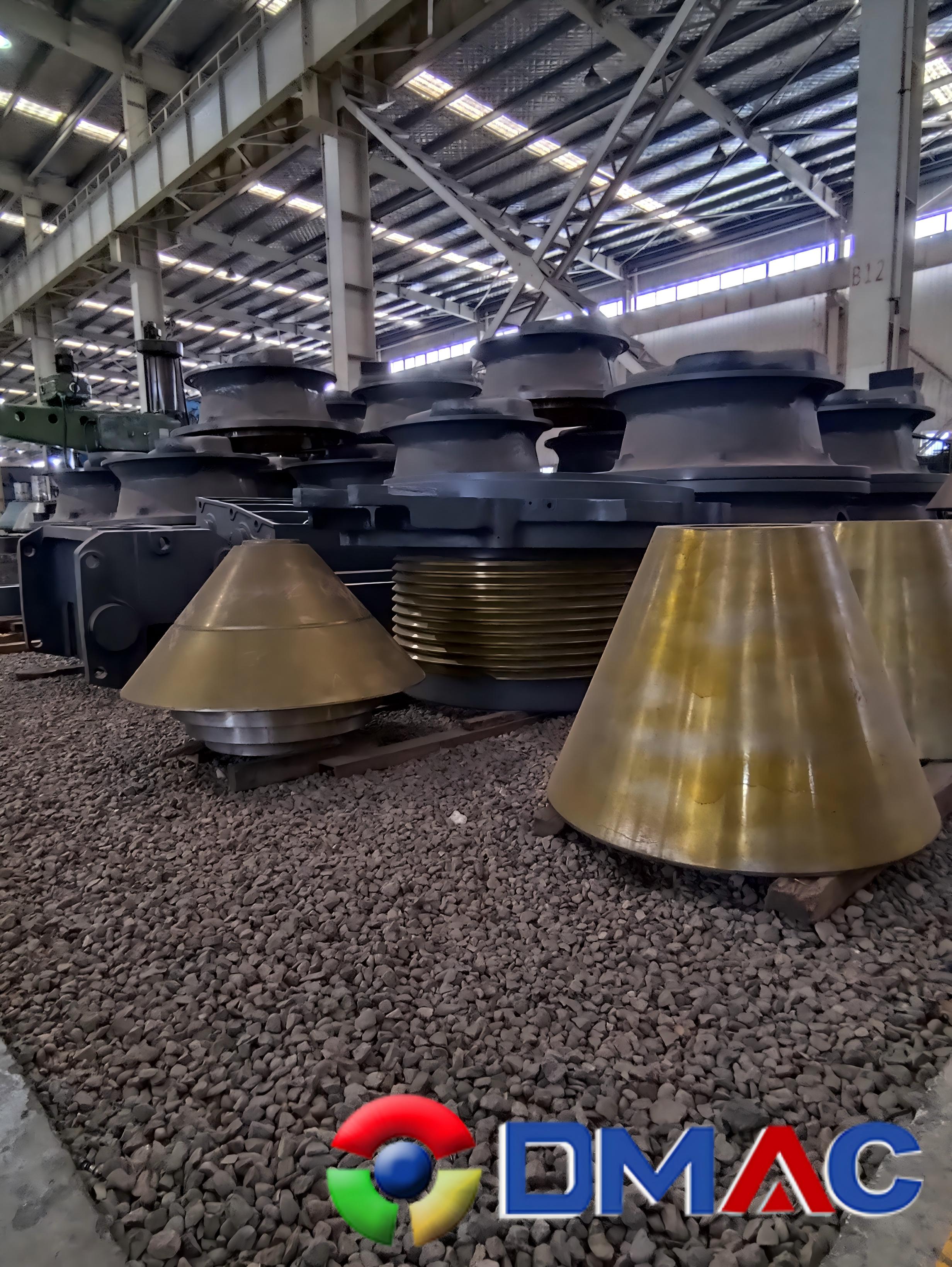
The Ultimate Buyer's Verdict: Look Beyond the Price Tag
When sourcing crusher wear parts, the initial purchase price is a deceptive metric. The true cost of a liner equals:
Total Cost = Purchase Price + Downtime Cost + Labor Cost for Replacements
An cheaply manufactured liner that saves you 15% upfront but causes two extra unscheduled shutdowns a year will actually drain your quarry's profitability. When evaluating a supplier, always ask about their foundry capabilities, their heat treatment control, and their QA tracking system.
DMAC Engineering Insights
The High-Manganese Misconception:
Many buyers believe that the harder a manganese liner is out of the box, the longer it will last. This is a myth. High manganese steel (Mn18Cr2) is relatively soft initially (200-220 HB). Its magic lies in its ability to "work-harden" up to 500+ HB under severe, continuous rock impact. Therefore, you must select your liner alloy based on your specific feed material (e.g., highly abrasive river pebbles vs. soft limestone) and your crusher's actual operating dynamics.
What rock type are you currently crushing, and what is your current liner lifespan?
Let us know your machine model and operating challenges in the comments below, or send us your drawings. The DMAC engineering team will help you optimize your liner profile and alloy selection for maximum tonnage!